
Day 3 – Second day of the Drake Passage crossing

Sunday, 04 January 2026 – written by Allie
Survey teams were up at 7am for the first seabird and marine mammal surveys. Thankfully the dense fog of last night had cleared slightly, though it still obscured the horizon. The strong 20 m/s (72 km/hr or 45 mph) west winds and some swell meant we were still rocking through the morning and afternoon, but any lingering seasickness should hopefully be short lived – we are arriving in the Antarctic Peninsula tonight!

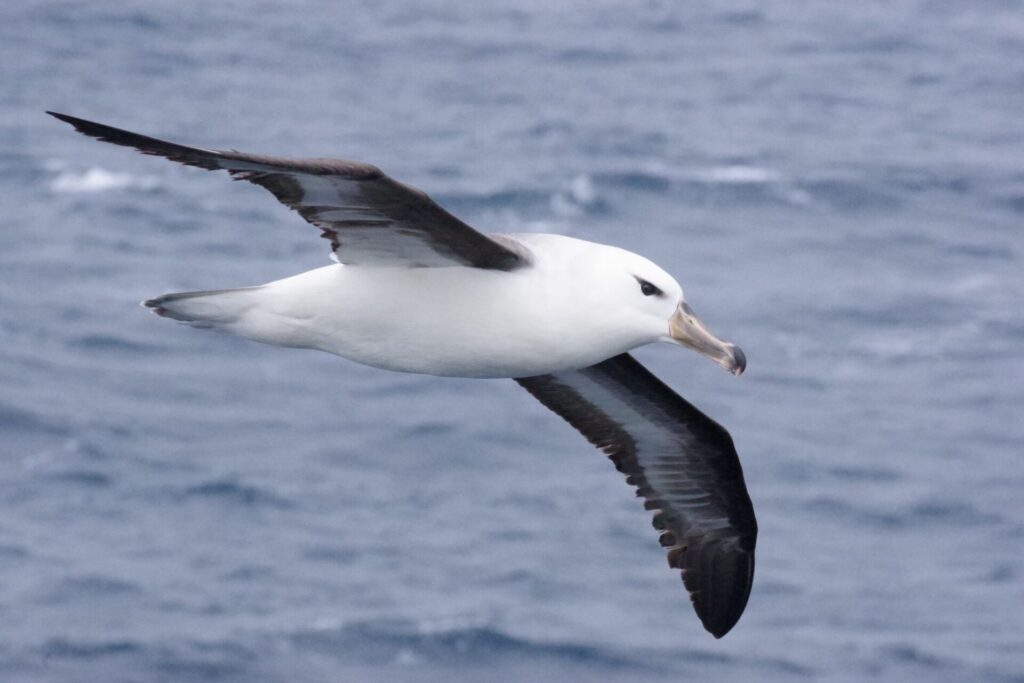
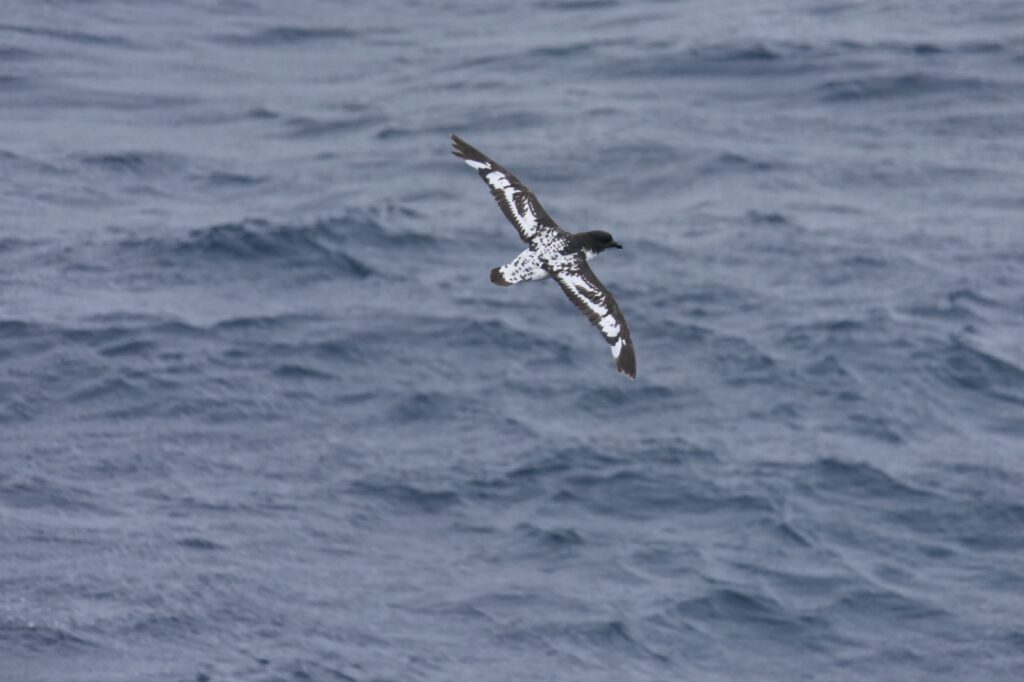
Throughout the day, we spotted our first Wilson’s storm petrels (also called Jesus birds because they appear to walk on water) and Cape Petrels (also called the pintado petrel, ‘pintado’ meaning ‘painted’ in Spanish – referring to the checkered upper parts and wings). We also saw lots of southern fulmars, blue petrels, Antarctic prions, some black-browed albatross, grey-headed albatross, light-mantled albatross, and more! It was also an exciting day for marine mammal sightings, mostly starting when we crossed above the continental shelf. Some lucky survey groups saw humpback whales, fin whales, an Antarctic fur seal, and even killer whales! Those of us who hadn’t seen any whales all day on survey were graced with a few humpback whales surfacing outside the window while we were eating dinner (Ellie’s first whale sighting ever!), and some more while we reviewed the day’s photos in the lounge after dinner.


Just after 8pm, we were all very excited to spot our first iceberg, though fog still obscured any land.

While not on survey effort, some of us enjoyed lectures given by the expedition staff on board – ‘The Frozen Food Web’, ‘Penguins of the World’, ‘Whales of the Southern Ocean’, and ‘Exploration of the Southern Ocean’. A few fun facts from the lectures:
- Krill are the keystone species of the Southern Ocean food web
- Penguins originated in New Zealand 66 million years ago and became the 18 species we have today (8 species occur regularly in this region, of which we may see 3-4)
- Blue whales are the largest animal to have ever lived (yes, bigger than dinosaurs!) and whalers in the 18/1900s wiped out approximately 99% of the blue whales in the Southern Ocean
- Human presence is a relatively new phenomenon in Antarctica – we only laid eyes on it for the first time in 1820.
The fact that it is still light out as I write this at 11pm is still disconcerting (especially since we are coming from Scotland where it gets dark before 4pm!). But, we are very excited for our first steps on land in Antarctica tomorrow – on Petermann Island – where we will be doing our first penguin surveys, observing gentoo and Adelie penguin behaviors!
Congratulations on the 200th blog post! Our whole family is avidly following your adventure and really enjoying all the photos. It’s been fun to see where the ship is, check the wind speed and wave height, read a recent blog post, then watch the fun videos on Instagram. Thanks for keeping this page going!
Thank you for the congrats. The students are having so much fun producing the posts and also the Insta-media.
What an exciting start to the Antarctic journey!! I still remember my own expedition from two years ago like it was yesterday... But I must say, spotting fin whales and orcas within the first days is incredible - we only saw them much later in the trip! I'm also a little jealous of the grey-headed albatross and light-mantled albatross spottings, we were not so lucky. A warm hello to Sonja and Mike, and to all the students - have the BEST time and make the most of every hour, it truly is an experience like no other!!!